

Frequently Asked Questions
Updated: Jul 28
Did you know?! Your broker helps you manage 25-40% of your payroll.
What do brokers do?
Benefits brokers help bridge the gap between your organization and the healthcare industry by providing:
Information and guidance in choosing insurance
Compliance information (in regard to the Affordable Care Act, or ACA)
Advice on how to minimize total costs
Assistance with employee communications
Help resolving benefit issues
Analysis of existing benefits and claims
Advise on changes to benefits packages
Direct assistance to employees
Education for employees
This means less time spent trying to get the best plan for your employees.
What does a benefits broker do for our company?
They assist in fair valuation, paperwork, and legal requirements. The right broker will bring much-needed support to your employees and organization.
Making sure that your employees have the best coverage at the best cost while remaining compliant eliminates risk for your organization.
How are brokers paid?
Brokers earn commissions based on a percentage of sales transactions.
This means no upfront cost to you! You work with us for free! Brokers are paid a commission directly from the insurance company, so your insurance rate is the rate you pay. That's it!
How is my employees' information used?
Business brokers ensure confidentiality and handle negotiations smoothly.
We will take care of everything for you with the highest regard for confidentiality. We work directly with the carriers through secure systems.
Does a broker need to be licensed?
Regulation and licensing of business brokers vary by state.
Monroe Benefits Advisory, LLC is licensed with the state of New York.
How do I choose a benefits broker?
The Society for Human Resource Management (SHRM) has created this graphic to help you narrow down the search. The most important thing is trust!
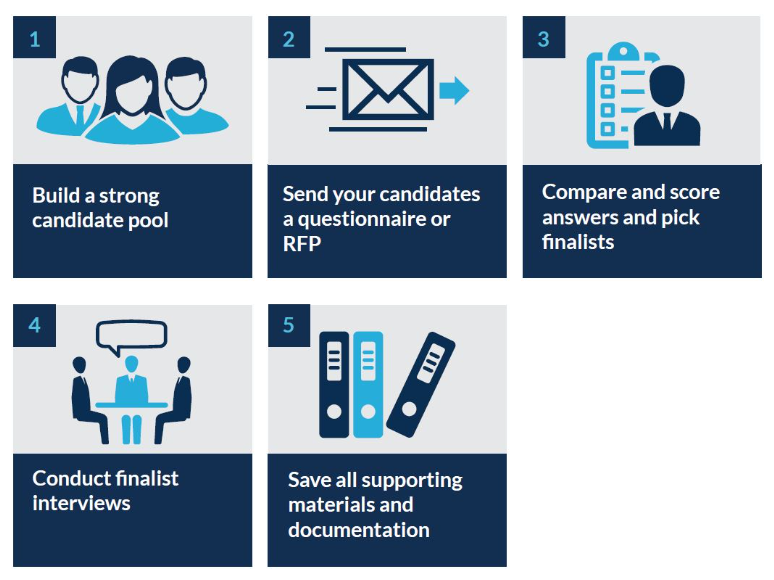
Some other factors to consider:
The company’s ownership structure. You may prefer a local, regional or national firm depending on your organization size/structure.
The experience levels of the team that will serve you.
Fees and/or commission schedule. Also make sure they agree to transparency of payments from 3rd party carriers and vendors they represent.
Verification that the broker has proper licensing and adequate E&O coverage.
Why should I choose Monroe Benefits Advisory, LLC?
Experienced advice. Personalized local service. Better benefits!
Over 40 years of combined HR and employee benefits expertise helping Rochester employers build stronger benefits programs, reduce administrative burdens, and support their employees with confidence.
Our decisions are backed by practical experience, not sales.
Being a small firm, we provide quick response times, greater accessibility, customized solutions, modern technology, and flexible service models!
We offer the following - all in one place and at no direct cost to you:
Development of competitive benefits strategy
Control of long-term healthcare costs
Navigation of compliance requirements
Improving employee recruitment and retention through
Open enrollment meetings
One-on-one employee support
Claims assistance
Benefits education
We also offer Human Resources Consulting services (not included in insurance commission - these are separate services paid for directly by the employer) including:
Labor law compliance
Wage & Hour compliance (FLSA)
Leave of Absence (NY PFL, FMLA, NY Sick Time, etc.)
Americans with Disabilities Act (ADA)
Workers Compensation
Unemployment
Onboarding/Offboarding
Handbook review/updates
Payroll
Recruiting/Hiring
Performance Management
Employee Relations
Compensation
Training/Development
Succession Planning
Workforce Planning
HR Audits
...and more!
For more information, please contact us!
Resources:
Society for Human Resource Management (SHRM) - The Ultimate Guide to Hiring a Benefits Broker
Society for Human Resource Management (SHRM) - Finding the Right Benefits Broker
Paychex - Working with a Benefits Broker


Comments